Luxury Watch Investment vs. Personal Wear: What’s the Smarter Choice?
Luxury Watch Investment vs. Personal Wear: What’s the Smarter Choice?
In recent years, the conversation around fine timepieces has shifted dramatically. Where collectors once debated movement finishing, escapement geometry, and military provenance, mainstream headlines now treat watches like speculative asset classes—tracking market indexes, auction records, and price trajectories.
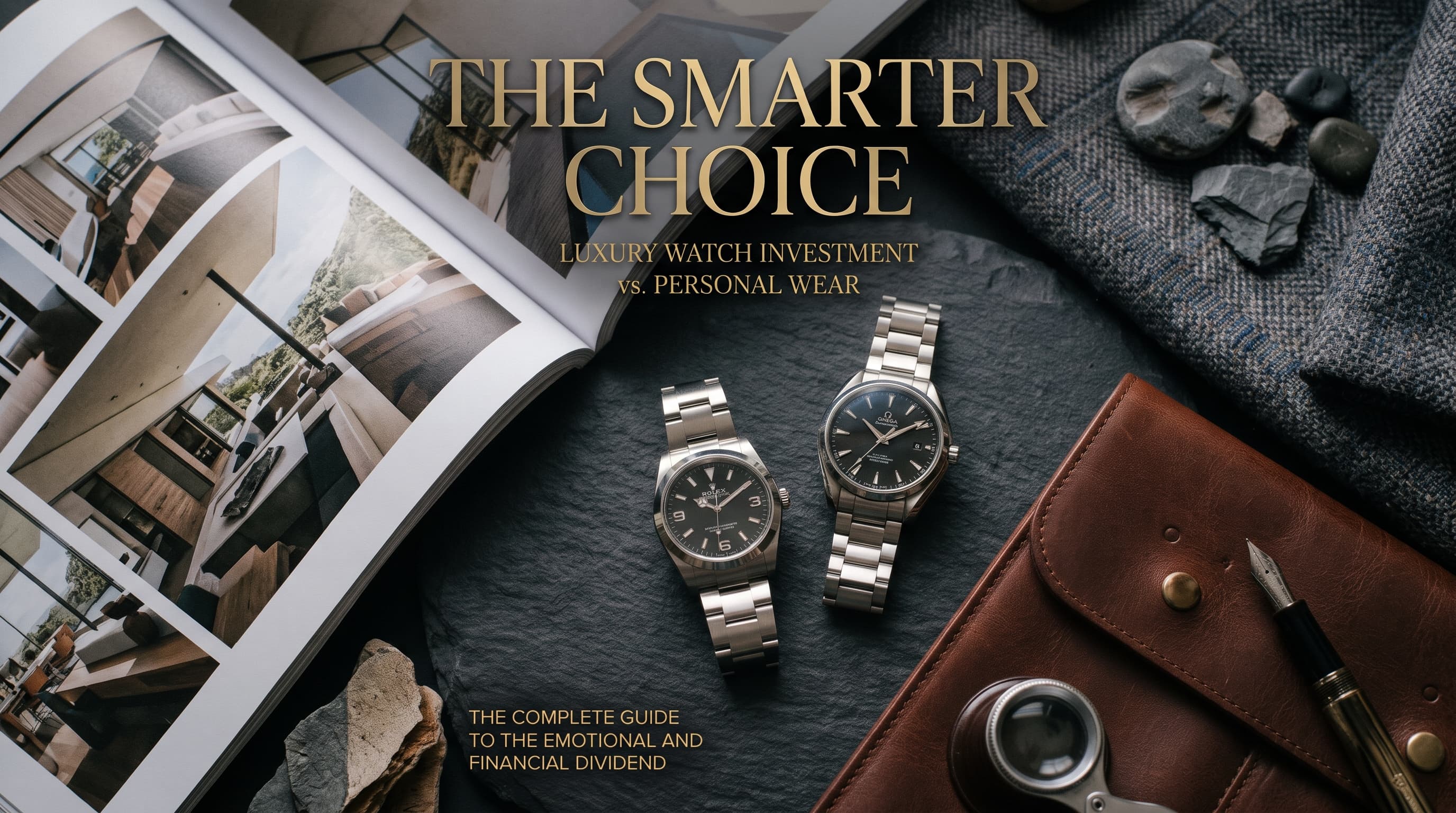
This leaves both aspiring buyers and seasoned collectors at a crossroads: Should you purchase a luxury watch as a financial investment, or purely for the joy of personal wear?
While the allure of a self-funding hobby is undeniable, approaching luxury horology purely as a portfolio play can quickly drain the romance from collecting. Here is an honest, grounded look at the realities of watch "investing," the true value of wearing your watches, and how to strike the perfect balance.
1. The Reality of the "Watch as an Investment"
The narrative that luxury watches only go up in value gained massive traction during the historic secondary market run of 2020–2022. However, viewing watches strictly as speculative assets comes with hard realities that spreadsheets often gloss over.
- Extreme Model Concentration: Only a tiny fraction of references consistently outperform inflation or hold sustained premiums over retail. Historically, this has been confined to select stainless steel sports models from the "Holy Trinity" (Patek Philippe, Audemars Piguet, Vacheron Constantin) and Rolex. Outside of these outliers, the vast majority of luxury watches function like cars: they experience initial depreciation the moment they leave an authorized boutique.
- The "Safe Queen" Dilemma: To maximize speculative return, an investment piece must remain in pristine, unworn, "new-old-stock" (NOS) condition with intact factory stickers, original serialized tags, and an unblemished box. The moment you strap it on and introduce a hairline scratch or desk-diving swirl, its speculative premium drops. Keeping a masterpiece locked in a safe deposit box defeats the mechanical purpose of its creation.
- Carrying and Transaction Friction: Unlike equities or gold, watches carry physical holding costs: insurance premiums, secure storage, and regular servicing (which can run $600 to $1,500+ every 5–7 years). Furthermore, converting a watch back into cash isn't instantaneous or free—consignment fees, dealer margins, and marketplace transaction costs can easily shave 10% to 20% off your gross exit price.
2. The Case for Personal Wear: The "Emotional Dividend"
When you buy a luxury watch primarily to wear it, the dynamic flips entirely. The return on your capital isn't paid out in quarterly yields; it is paid in what horologists call the emotional dividend.
- Living With the Craft: Mechanical watches are intimate machines. Feeling the tactile winding click of a manual-wind chronograph, watching an escape wheel oscillate at 28,800 beats per hour, and seeing high-polish bevels catch the sunlight during a morning drive are sensory pleasures you can't experience from a safe.
-Marking Life's Milestones: A luxury watch is one of the few physical objects capable of outliving its original owner while retaining its function. Purchased to commemorate a career promotion, a wedding, the birth of a child, or a hard-won personal milestone, a daily watch absorbs your history. The scratches and wear marks become a visual timeline of your life. - Effortless Confidence: A well-chosen timepiece anchors your daily presentation. It communicates an appreciation for detail, heritage, and permanence in a world dominated by disposable digital tech.
3. Financial Comparison: Investor Mindset vs. Wearer Mindset

4. The Smarter Choice: The "Smart Hybrid" Strategy
You don’t have to choose between financial recklessness and sterile speculation. The savviest collectors in the world adopt a capital preservation mindset—buying pieces they genuinely love to wear while making smart purchasing decisions that protect their downside.
Buy Pre-Owned and Skip the Depreciation Curve
If you buy a brand-new watch at full retail MSRP, you absorb the initial hit. But if you purchase an authenticated, pre-owned luxury watch in mint or excellent condition, the original owner has already taken that hit. You acquire the piece at true market value, meaning if you decide to trade or sell two to five years down the road, your net cost of ownership is often negligible.
Insist on Complete Full Sets
Always prioritize pieces that retain their original presentation box, warranty cards, manuals, and accessories. While a "naked" watch might save you 10% upfront, a verified full set commands a higher resale value, liquidates twice as fast, and offers ironclad proof of provenance.
Stick to Proven Architectural Icons
If retaining value while wearing your watch daily is important to you, stick with established design pillars that have endured for decades:
- The Tool Diver: Omega Seamaster Diver 300M, Tudor Black Bay, or Rolex Submariner.
- The Everyday Sports Watch: Omega Aqua Terra, Rolex Datejust, or IWC Ingenieur.
- The Timeless Chronograph: Omega Speedmaster Professional or Breitling Navitimer/Top Time.
Final Thoughts: Wear the Watch
Treating fine watches purely as financial instruments often leads to anxiety—constantly tracking price charts and worrying about micro-scratches.
The smartest choice is simple: Buy what you love, buy it smartly on the pre-owned market with complete box and papers, and wear it unapologetically. A luxury watch was engineered to keep time on a living, breathing wrist. When you let it do its job, the memories attached to it will always far outweigh the market fluctuation on a spreadsheet.