
Omega vs. Rolex: Which Brand Makes More Sense as Your First Luxury Watch?
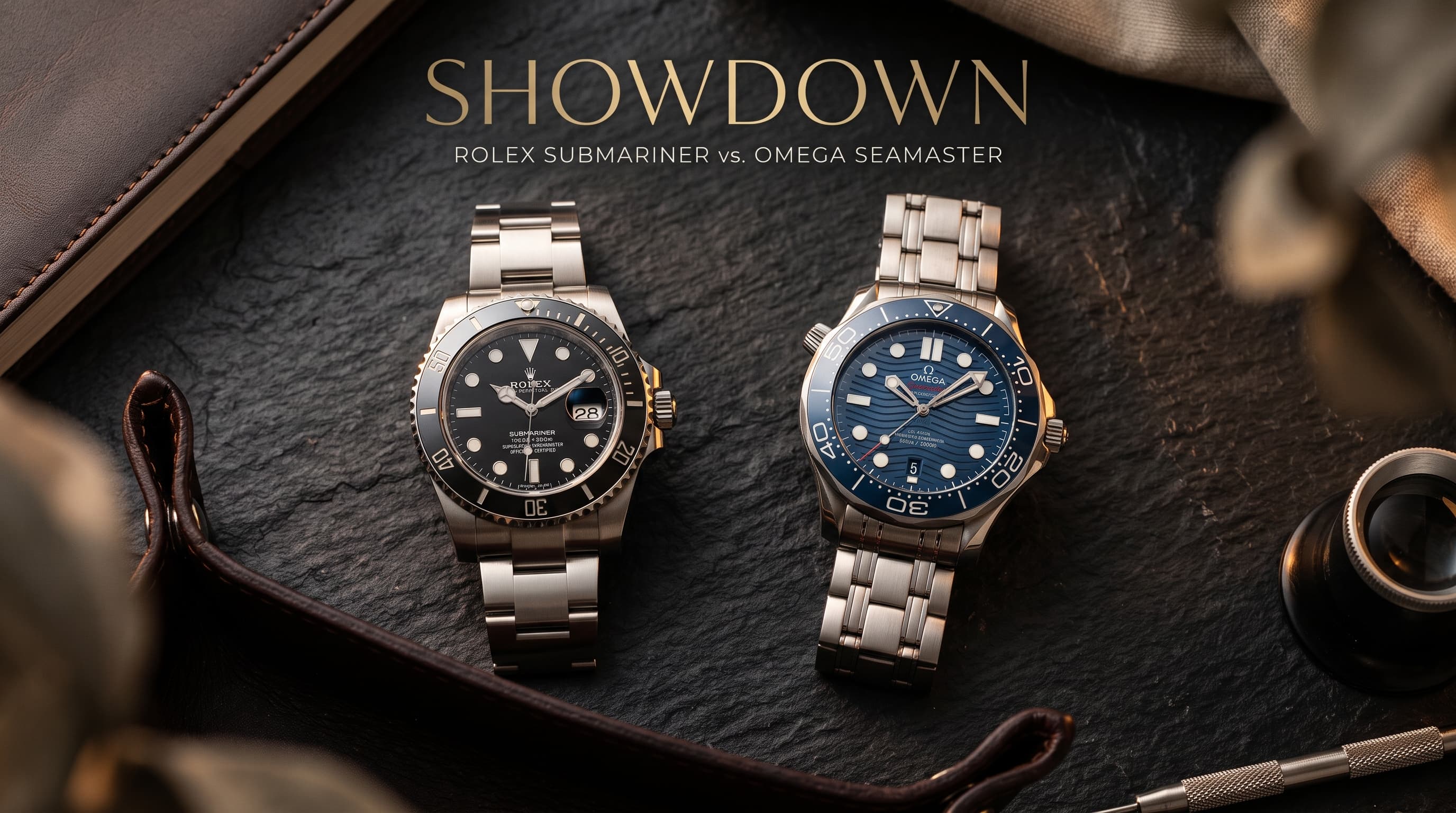
Omega vs. Rolex: Which Brand Makes More Sense as Your First Luxury Watch?
Stepping into luxury mechanical watchmaking is a major milestone. For most first-time buyers, that journey narrows down to two titans of Swiss horology: Rolex and Omega.
Both boast peerless heritage, iconic designs, and global prestige. Yet, their philosophies—and how they treat modern collectors—could not be more different. One trades on scarcity, universal brand recognition, and rock-solid secondary value; the other delivers cutting-edge mechanical innovation, transparent availability, and unmatched value per dollar.
If you are preparing to pull the trigger on your first flagship timepiece, here is a practical, unbiased breakdown to help determine which path fits your wrist, lifestyle, and budget.
1. Brand Equity and Recognition: The Crown vs. The Greek Letter
When evaluating pure public perception, context matters:
- Rolex (The Global Benchmark): The Crown is universally recognized far outside horological circles. Non-watch enthusiasts instantly understand what a Submariner or Datejust represents: achievement, status, and luxury. If your primary goal is buying an internationally recognized status symbol that speaks for itself across boardrooms and social settings, Rolex remains untouched.
- Omega (The Enthusiast's Darling): Omega carries an equally formidable pedigree—from timing the Olympic Games since 1932 to landing on the Moon with Apollo 11 and suiting up James Bond on the silver screen. In watch collector communities, Omega commands immense respect for its historical significance and unpretentious dedication to watchmaking craft.
2. Retail Reality: Availability vs. The "Waitlist" Game
Perhaps the sharpest contrast between the two brands lies in the buying experience:
- The Rolex Experience: Walking into an Authorized Dealer (AD) and buying a stainless steel sports model (Submariner, GMT-Master II, Daytona) at retail is practically impossible without prior spend history or an extended wait. This dynamic forces first-time buyers to either cultivate an AD relationship over months/years or turn to the secondary market where popular models trade at a premium over MSRP.
- The Omega Experience: Omega makes acquiring a luxury watch a celebratory experience from day one. You can stroll into a boutique, try on a Seamaster Diver 300M, Speedmaster Professional, or Aqua Terra, and walk out with it on your wrist. Furthermore, on the pre-owned or grey market, Omega offers phenomenal savings off retail MSRP.
3. Horological Engineering & Tech: Value for Dollar
Under the hood, Omega has aggressively pushed technical standards over the last decade:
- Movement Technology: Omega’s Co-Axial Master Chronometers (METAS certified) set the modern standard for resistance to everyday hazards, withstanding magnetic fields up to 15,000 gauss thanks to silicon balance springs. They also showcase beautiful movement finishing through sapphire exhibition casebacks on most core models.
- Rolex Robustness: Rolex calibres (Superlative Chronometers regulated to -2/+2 seconds per day) are legendary workhorses built for longevity. They feature Paramagnetic blue Parachrom hairsprings and Paraflex shock absorbers. While historically hidden behind solid steel casebacks, Rolex movements are renowned for their bulletproof reliability and multi-decade serviceability.
- Materials & Fit: Omega pioneered laser-etched ceramic dials and Liquidmetal bezels at approachable price points. Rolex counters with proprietary alloys like Oystersteel (904L), which offers higher corrosion resistance and a distinct sheen, paired with class-leading bracelets like the Oyster and Jubilee, alongside the GlideLock micro-extension clasp.
4. Head-to-Head: The First-Watch Showdowns

5. Long-Term Value & Liquidity
A watch should always be purchased because you love wearing it, but capital preservation is a natural consideration for any first-time luxury purchase: - Rolex: Functions almost like liquid currency in the luxury market. Steel sports models retain their value better than nearly any consumer product in the world. If you ever need or choose to trade up, sell, or liquidate, finding a buyer is near-instantaneous.
- Omega: Tends to experience standard secondary depreciation if purchased brand new at retail. However, buying a mint, pre-owned, complete full-set Omega lets you bypass that initial depreciation, giving you a world-class luxury timepiece that holds steady over time while offering vastly more horological complexity per dollar spent.
The Verdict: Which One Should You Buy?
- Choose Rolex if: You want a singular, universally recognized status symbol that retains the strongest secondary market value, you appreciate understated classic design, and you are comfortable paying a secondary premium or playing the dealer waiting game.
- Choose Omega if: You want the absolute best mechanical specifications and finishing for your dollar, you value transparent availability and historic milestones (space exploration and ocean depth), and you prefer a watch admired by discerning enthusiasts rather than the casual crowd.