
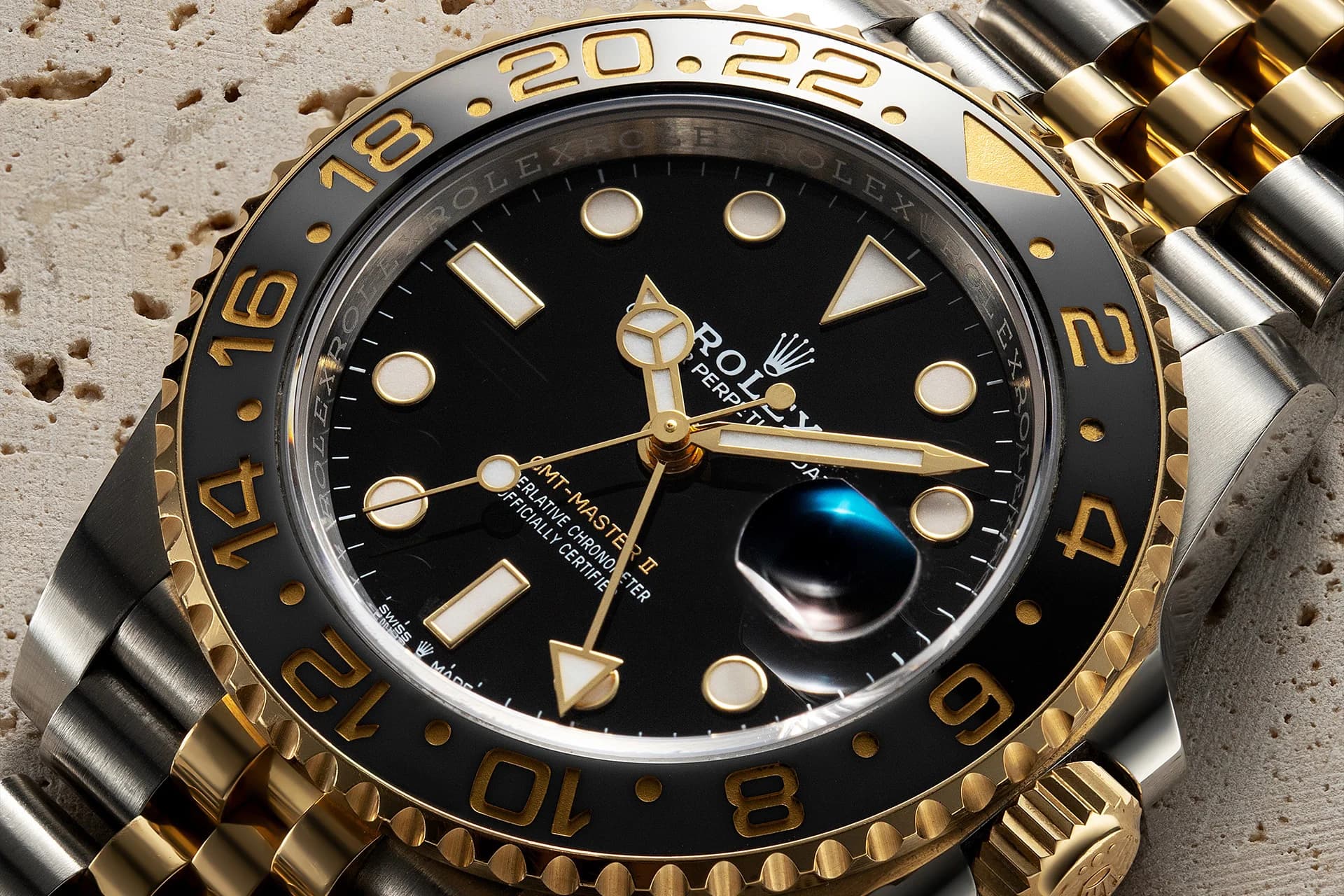
Watch Crystal Types Explained: Sapphire, Mineral and Acrylic
The watch crystal is the single component people look through constantly without giving it a second thought. Yet it carries a massive engineering burden: it keeps water, humidity, and micro-debris away from the movement, maintains structural integrity under pressure, and takes the brunt of every accidental bump against a brick wall or doorframe.
Despite modern marketing claims, there is no universally "perfect" crystal. Watchmakers choose materials based on an engineering trade-off: hardness (scratch resistance) versus toughness (shatter resistance).
Here is how the three dominant materials—acrylic, mineral glass, and synthetic sapphire—actually behave on the wrist, along with how to tell what’s protecting your dial.
The Big Three: How They Compare

Read across those rows, and the pattern is clear. As you climb the hardness scale from acrylic to sapphire, you gain scratch resistance and clarity but give up a little impact resistance. None of the three is the right answer for every watch, which is the whole point of the sections that follow.
1. Acrylic (Plexiglas, Hesalite, PMMA)
Acrylic is essentially a specialized thermoplastic (polymethyl methacrylate). It dominated military and civilian watchmaking from the 1930s well into the 1970s.
- The Advantage: Acrylic has outstanding tensile flexibility. When subjected to a hard knock, it absorbs kinetic energy by flexing slightly rather than fracturing. Even under catastrophic impact, it tends to crack or craze into spiderweb patterns without splintering into razor-sharp dust. This is the exact reason NASA flight-qualified the Omega Speedmaster Professional with a Hesalite crystal in 1965: inside a zero-gravity space capsule, loose shards of shattered glass floating around could blind astronauts or short out electronics.
- The Drawback: At a modest 3 on the Mohs hardness scale, everyday contact with rough nylon, desk edges, or brickwork will scuff it.
- The Fix: Unlike glass or sapphire, minor scratches in acrylic take less than five minutes to buff out at home using a micro-abrasive polishing paste (like PolyWatch) and a microfiber cloth. It also lends dials a soft, vintage optical distortion that sapphire struggles to replicate.
2. Mineral Glass (Toughened Silica)
Mineral crystals are crafted from standard glass that has undergone chemical hardening or thermal tempering to tighten its surface tension. Familiar proprietary variants include Seiko’s Hardlex and proprietary mineral-composite crystals used in dive watches.
- The Advantage: Scoring roughly 5 to 6 on the Mohs scale, mineral glass resists everyday surface abrasions far better than acrylic. It remains cost-effective to manufacture in flat shapes and provides crisp optical clarity without the manufacturing cost of synthetic gems.
- The Drawback: It sits in a tricky middle ground. While it’s harder than plastic, mineral glass does not possess sapphire’s invulnerability to scratches. When it does pick up an unsightly gouge, diamond paste rarely polishes it out cleanly—meaning replacement is almost always the only fix.
3. Synthetic Sapphire (Crystalline Aluminum Oxide)
Synthetic sapphire is the undisputed gold standard of modern luxury horology. Created by crystallizing aluminum oxide ($Al_2O_3$) under intense heat and pressure (typically via the Verneuil flame-fusion process), it shares the same structural properties as natural corundum gemstones.
- The Advantage: Registering a staggering 9 on the Mohs scale, sapphire is surpassed in hardness only by diamond and silicon carbide (moissanite). In normal daily life, house keys, steel cutlery, and abrasive desk surfaces will never leave a scratch on it. If your watch is ten years old, the sapphire crystal will look just as immaculate as the day you unboxed it.
- The Drawback: High hardness always introduces brittleness. Sapphire does not flex. A high-velocity strike against a pointed granite countertop or tile floor won't scratch it—it can shatter it completely, scattering microscopic crystalline shards into the dial and delicate gear train. Sapphire also has a high refractive index, meaning without anti-reflective (AR) chemical coatings applied to the underside, it can pick up noticeable glare in direct sunlight.
Practical Considerations: Shapes & Coatings
Beyond raw materials, two factors heavily influence how a crystal behaves in real life:
Profile Geometry:
- Flat: The most cost-efficient and least prone to edge-chipping, but prone to reflecting overhead light like a mirror.
- Single-Domed: Rounded on the exterior and flat underneath; this magnifies the dial like a lens and can warp legibility from steep angles.
- Double-Domed: Curved on both the outer and inner surfaces. This preserves clear, distortion-free dial visibility even when viewed almost edge-on, making it a favorite for professional dive watches.
Anti-Reflective (AR) Coatings:
- Ultra-thin metal oxide layers are applied to reduce glare. While an under-side AR coating is protected inside the watch case, crystals with outer AR coatings can pick up scratches on the chemical coating itself. Often, what owners assume is a scratched sapphire crystal is simply the exterior anti-reflective film taking damage.
How to Tell What Crystal Is on Your Watch
If your watch’s technical spec sheet is nowhere to be found, you can easily identify the crystal using three non-destructive tests:
- The Tap Test: Gently tap your fingernail against the center of the crystal. Acrylic emits a dull, hollow, plastic thud. Mineral glass and sapphire produce a sharp, higher-pitched ping.
- The Temperature Test: Glass and sapphire conduct heat away from your skin quickly; touch the surface directly to your lips or forehead. Acrylic feels neutral or slightly warm, while genuine sapphire immediately feels noticeably cold like ice.
- The Water Droplet Test: Place a clean drop of water on the crystal. Because of surface tension on dense crystalline aluminum oxide, water on sapphire beads into a tight, distinct dome that slides around cleanly without smearing. On acrylic or untreated mineral glass, the droplet tends to flatten and spread out across the surface.
Which Crystal Should You Choose?
- Pick Acrylic if you appreciate authentic vintage aesthetics, want a crystal you can buff back to mirror perfection yourself, or prefer shatter-proof safety in high-impact environments.
- Pick Mineral Glass if you need a durable, reliable daily watch that balances decent scratch resistance with an accessible price point.
- Pick Sapphire if your priority is effortless longevity and zero visible wear—ensuring the face of your watch stays as sharp and transparent decades from now as it was on day one.