
What Does "Full Set" Actually Mean When Buying a Pre-Owned Luxury Watch?
What Does "Full Set" Actually Mean When Buying a Pre-Owned Luxury Watch?
In the pre-owned luxury watch market, few phrases carry as much weight, command as high a premium, or create as much confusion as "Box and Papers" or "Complete Full Set."
For seasoned collectors, acquiring a full set is an essential standard. For first-time buyers, however, the terminology can feel murky: Does a travel pouch count as the original box? Are warranty cards still valid after expiration? What happens if an accessory is missing?
Understanding what constitutes a true full set—and why it directly impacts resale value, liquidity, and authenticity—is one of the most critical skills you can develop when buying a pre-owned timepiece.
1. Deconstructing the "Full Set": What Belongs in the Kit?
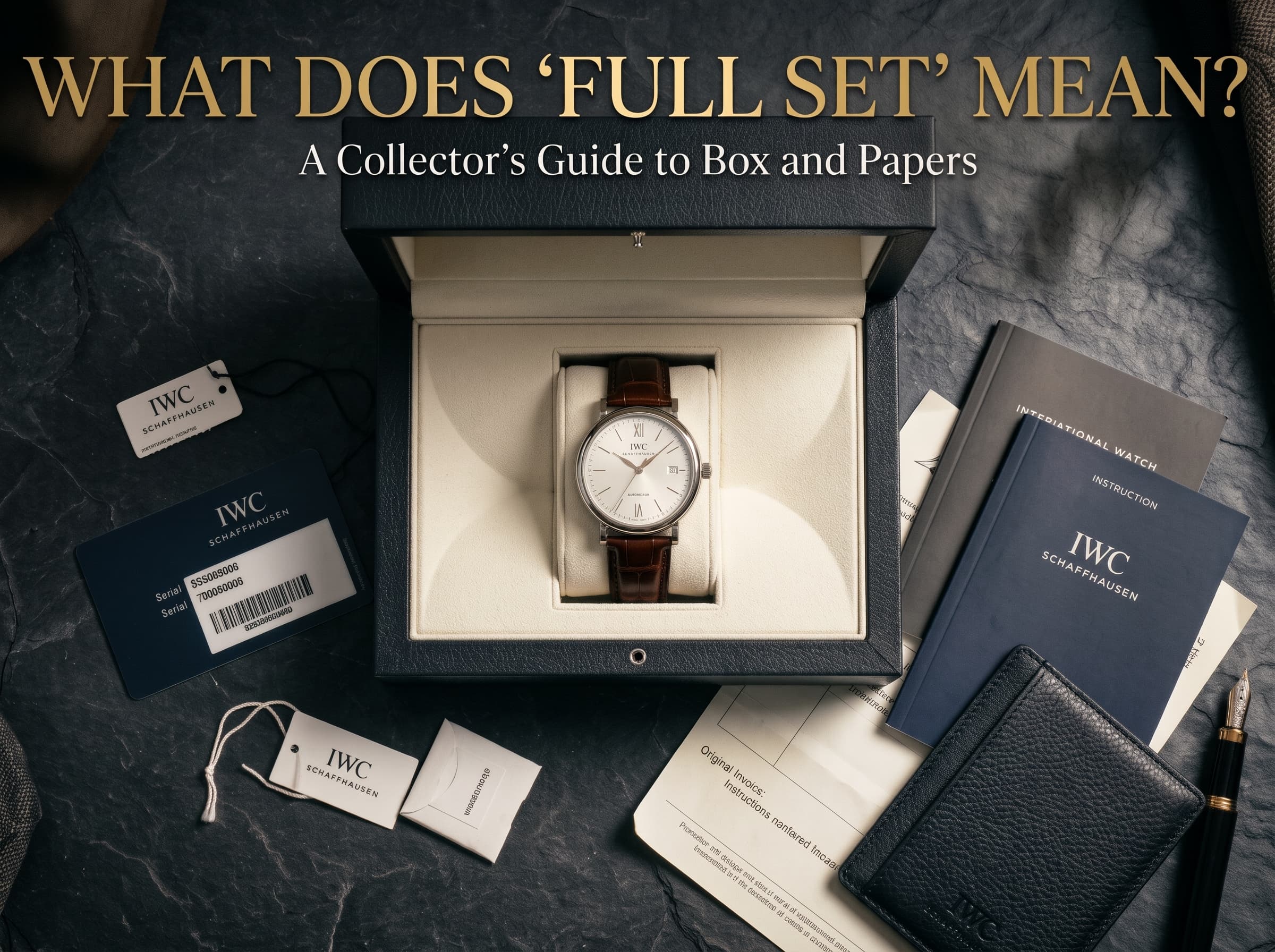
When a luxury timepiece leaves an authorized boutique, it is delivered as a comprehensive package. While the exact contents vary between marques like Rolex, Omega, Breitling, and Cartier, a genuine "Full Set" generally encompasses four distinct tiers:
The Outer and Inner Boxes
Inner Presentation Box: Crafted from polished lacquered wood, supple leather, or high-grade composite materials, tailored with an internal watch pillow or collar.
Outer Packaging: The protective cardboard sleeve, outer clamshell box, or shipping carton designed to protect the presentation case from wear and sun fading.
Provenance and Documentation
- Official Guarantee / Warranty Card: The single most critical non-watch component. Modern cards are plastic or digitized NFC cards bearing the watch's exact model reference, unique serial number, authorized dealer stamp or code, and the original purchase date.
- Instruction Manuals: Reference-specific user booklets detailing movement operation, crown positions, and water-resistance parameters.
- Specialist Certificates: Chronometer performance certificates (such as COSC slips or METAS Master Chronometer cards), limited-edition numbered certificates, or archive extracts.
Factory Tags and Accessories
- Serialized Hangtags: Small plastic or cardstock tags showing the movement number, reference, and barcode matching the watch case.
- Bezel Protectors: Molded clear plastic covers originally shipped to shield polished bezels from transport friction.
- Service Booklets & Card Wallets: Leatherette or fabric cardholders designed to house the warranty card and documentation neatly inside the box.
Hardware Extras
- Spare Bracelet Links: Factory links removed during initial sizing. A watch missing three links is incomplete, and replacing genuine brand links (especially in titanium or precious metals) can add hundreds of dollars in unexpected costs.
- Specialty Tools & Extra Straps: Straps, changing tools, loupes, or commemorative accessories bundled with special editions (such as Omega’s Speedmaster Moonwatch kit or Aqua Terra James Bond sets).
2. Why the Documentation Carries Huge Financial Weight
It is often asked: “If I’m wearing the watch on my wrist, why do paper and cardboard matter so much?”
The answer comes down to three marketplace realities:
Unquestioned Provenance & Authenticity: While counterfeiters can replicate basic aesthetic details, forging complete sets with matching fonts, serial engravings, watermarked papers, and active digital warranty cards is exceptionally difficult. A complete paper trail offers undeniable proof of legitimacy.
Resale Liquidity: When it comes time to trade up or sell, a full-set watch liquidates significantly faster than a "naked" watch (watch only). Discerning buyers and reputable dealers actively seek complete packages, giving you wider market appeal.
The Valuation Premium: Depending on the brand and model rarity, a complete full set typically commands a 10% to 25% price premium over an identical watch sold on its own. For vintage or limited-edition models, that spread can climb even higher.
**3. The Condition Spectrum: "Watch Only" vs. "Full Set"

4. Red Flags and Nuances to Watch Out For
Navigating the market requires a keen eye for subtle discrepancies:
- Mismatched Serials: Always inspect the serial number engraved on the watch (typically between the lugs, on the rehaut, or on the caseback) against the number printed on the warranty card. If they do not match down to every digit, it is not an original set.
- Period-Incorrect Boxes: Over decades of production, brands periodically update their packaging. A vintage piece inside a modern boutique box indicates the original presentation case was lost and replaced later.
- "Service Papers" vs. "Original Papers": Official service receipts from an authorized service center (like a Rolex Service Center card or Omega service pouch) prove authenticity and recent mechanical health, but they are not the same as the original birth papers from the point of sale.
The Verdict
If you are buying a pure beater watch solely for physical utility, an unboxed "watch-only" piece can offer a cost-effective entry point.
However, if you view your timepiece as an enduring asset—one that retains capital, commands immediate respect on the secondary market, and can one day be passed down as a complete heirloom—insisting on a verified full set is always the smarter investment.